
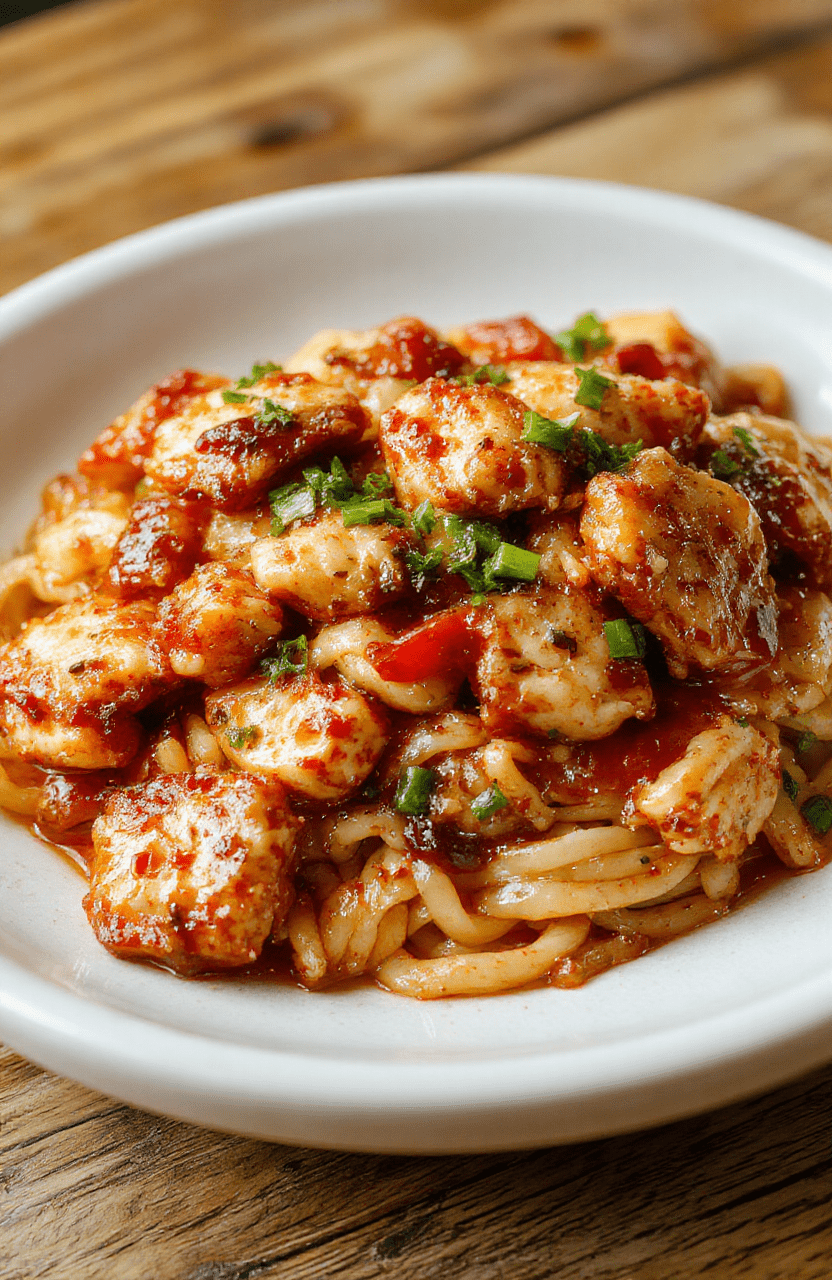
🔥 Spicy, Savory, & Satisfying: Best Kung Pao Noodles with Chicken You’ll Ever Make at Home! 🍜🔥
1. Introduction
There’s something unmistakably *comforting* yet thrilling about a bowl of authentic kung pao noodles — crisp roasted peanuts, tender chicken morsels, and zesty Sichuan peppercorns dancing with fiery chilies in a glossy, umami-rich sauce. This beloved Sichuan classic balances heat, sweetness, and nuttiness in perfect harmony. Unlike takeout versions that often lean too sweet or soggy, our homemade recipe delivers restaurant-quality texture and depth — thanks to a few clever techniques, including dry-frying the chicken for extra chew and finishing with toasted Sichuan peppercorns for that signature mala (numbing-spicy) tingle. Whether you’re craving bold flavors after a long day or prepping for a spicy game-day spread, these spicy Chinese noodles hit all the right notes.
2. Why You’ll Love This Recipe
- Ready in 30 minutes — faster than delivery and infinitely more satisfying.
- One-pan cooking — minimize cleanup and maximize flavor development.
- Highly customizable — swap protein, swap veggies, or go vegetarian.
- Better-for-you — no hidden sugars or preservatives, and you control the spice level.
- Meal-prep friendly — tastes even better the next day (if it lasts that long!).
3. Ingredient Notes
Quality makes *all* the difference in kung pao noodles — especially with such a short list of star ingredients. Here’s how to get it right:
- Chicken breast or thighs? I prefer boneless, skinless chicken thighs here — they stay juicy even with high-heat stir-frying. If using breast, slice thinly and against the grain to prevent toughness.
- Dried chilies — not just for heat, but for depth. Use a mix: base with mild Guajillo or Calabrian, then add a couple of dried arbol or Thai bird’s eye chilies for that true Sichuan fire. Pro tip: Toast them lightly in a dry pan before slicing — it unlocks richer aroma.
- Sichuan peppercorns — essential for the numbing kick. Don’t skip or substitute with black pepper. Toast and grind them fresh in a spice grinder just before adding to the wok.
- Peanuts — use unsalted, raw or roasted,皮-freed peanuts for the best crunch. Toast them in the wok after cooking the chicken for that restaurant finish.
- Dark soy sauce — adds color and molasses-like richness. Light soy sauce alone won’t give the same depth.
- Noodle choice — fresh egg noodles (or dried udon/ramen) work best. If you’re serious about authenticity, try making your own with the Philips Pasta Maker for springy, hand-crafted texture.
4. Kitchen Tools You Need
You don’t need fancy gear — but a few smart tools make or break stir-fry success:
- A hot wok or heavy skillet — cast iron or carbon steel is ideal to retain high heat for that smoky wok hei flavor. If you’re upgrading your cookware, the T-fal 14-Piece Hard Anodized Nonstick Set gives excellent heat distribution and easy cleanup.
- A sharp chef’s knife & cutting board — you want uniform ¼-inch chicken cubes and thin chili slices for even cooking. The Fullstar Ultimate Veggie Prep Master includes an excellent mandoline for slicing chilies paper-thin in seconds.
- Spice grinder or mortar & pestle — for toasting and grinding fresh Sichuan peppercorns. Freshly ground has floral, citrusy notes no pre-ground jar can match.
- Heat-safe tongs & spatula — essential for tossing noodles without splattering hot oil. The Deluxe 33-Piece Silicone Utensil Set handles high heat beautifully.
For larger batches, the Ninja Foodi Smart XL Indoor Grill & Air Fryer Combo is lifesaver — roast peanuts or chicken wings ahead with zero mess. And if you love experimenting, the Ninja Mega Kitchen Power System (with dough hook, food processor, and mixer) streamlines prep for everything from dough to nut butters.
5. How to Make Kung Pao Noodles with Chicken
Phase 1: Prep Like a Pro (Mise en Place)
Stir-frying moves fast — preparation prevents panicky mistakes. Start by slicing:
- 2 boneless chicken thighs (cut into ¾-inch cubes)
- 8–10 dried red chilies (remove seeds for milder heat, leave in for fiery)
- 1 small red bell pepper (julienne)
- 1 cup baby corn or water chestnuts (sliced)
- 2 green onions (white & green parts separated)
Next, toast and grind:
- 1 tsp Sichuan peppercorns — heat in a dry pan over low for 2 mins until fragrant, cool, then pulse in spice grinder.
- ⅓ cup peanuts — toast in the same pan 3–4 mins until golden (keep heat low or they burn fast).
Make the sauce while things cool:
Stir together:
• 2 tbsp dark soy sauce
• 1 tbsp light soy sauce
• 1 tbsp Shaoxing wine (or dry sherry)
• 1 tbsp Chinkiang vinegar (or rice vinegar + ½ tsp sugar)
• 1 tsp sesame oil
• 1 tsp cornstarch
• 2 tsp sugar
Phase 2: Wok Hei — The Magic Step
Heat your wok over maximum heat until smoking. Add 1 tbsp oil. Swirl, then add chicken in a single layer. Let sear undisturbed 1–2 minutes until golden, then stir-fry 2 more mins until cooked through. Transfer to a plate.
Why this works: Dry-frying creates tiny caramelized bits that build flavor layers.
Phase 3: Build the Sauce & Aromatics
Reduce heat to medium-high. Add 1 tbsp oil. Toss in chilies and white parts of green onions. Stir 30 secs — don’t burn them! They should turn fragrant but not black. Add ginger (1 tbsp minced — optional but *highly* recommended) and stir 15 seconds.
Return chicken to wok. Pour sauce over and stir 20 seconds — it’ll thicken and cling to the chicken.
Phase 4: Toss In Noodles & Finish
Drop in cooked, drained noodles (about 8 oz, cooked al dente). Use tongs to toss gently — no overcrowding! Let sit 15 secs to crisp slightly, then stir in bell pepper and baby corn. Cook 1 minute until just tender-crisp.
Off heat: Stir in toasted peanuts, ground Sichuan peppercorns, and reserved green tops. Toss one last time.
6. Expert Tips for Success
- Don’t soak egg noodles — just blanch — 2–3 mins in boiling water, then rinse with cold water and toss with ½ tsp oil to prevent sticking.
- Double-toast the chilies — once whole in dry pan, then again sliced in oil. This deepens flavor without adding raw bitterness.
- Use room-temperature sauce — cold sauce stops the wok’s heat, causing steaming instead of stir-frying.
- Go spicy gradually — it’s easier to add heat than remove. Start with half the chilies, taste, then add more.
- Finish with a splash of Shaoxing wine — drizzle ½ tsp over finished noodles for香气 (xiāngqì, “fragrant aroma”).
7. Variations & Substitutions
- Veggie version — swap chicken for extra-firm tofu (pressed & cubed, air-fried extra-crispy) or tempeh. Add broccoli florets and snow peas.
- Low-sodium twist — use tamari instead of soy, reduce sugar to 1 tsp, and add a splash of coconut aminos.
- Gluten-free — ensure tamari and Shaoxing substitute (rice wine) are GF. Use rice noodles instead of egg noodles.
- Extra nutty — add 2 tbsp crushed cashews + peanuts for contrast.
- For kids — use bell pepper strips only, reduce chilies to 2, and swap vinegar for a touch of orange juice.
8. Storage & Reheating
Store noodles (without peanuts) in an airtight container for up to 3 days.
Reheat smartly:
• Stovetop: Heat 1 tsp oil in wok over medium. Add noodles, stir 2 mins until hot. Stir in peanuts last.
• Air fryer: 350°F for 3–4 mins — gives that re-crisped texture!
• Never microwave with peanuts — they turn rubbery. Add fresh nuts after reheating.
9. FAQ
Q: Can I use peanut butter instead of peanuts?
A: Not recommended — peanut butter adds starch and fat that changes sauce texture. Toasted peanuts add irreplaceable crunch and flavor.
Q: Why is kung pao sometimes sweet? Is that authentic?
A: Some Westernized versions over-sweeten for broader appeal. Traditional Sichuan kung pao is savory with a *hint* of sweetness (from sugar or apples) — not candy-like.
Q: My sauce was too thin — what went wrong?
A: Likely two culprits: not reducing the sauce enough, or using too much liquid (e.g., watery vegetables like cucumber). Always pre-drain veggies, and let sauce simmer 10 extra secs before adding noodles.
Q: Can I make this ahead for meal prep?
A: Yes! Cook everything except peanuts and green onions, store separately. Reheat noodles, then finish with fresh additions just before serving.
10. Conclusion
This kung pao noodles recipe brings the bold spirit of Sichuan home — fiery, fragrant, and deeply satisfying. With a balance of crunch, chew, and complex spice, it’s proof that homemade Chinese food can beat any takeout. Serve with a cold glass of jasmine milk tea (or a Ninja SLUSHi Pro slush for game day!) and enjoy that perfect, tingling finish.
Craving more bold flavors? Dive into our Sweet & Spicy Honey Pepper Chicken or Buffalo Chicken Sliders for more crowd-pleasing action. And don’t miss the Ultimate Game Day Appetizers list for spread that’s hot, fast, and unforgettable.
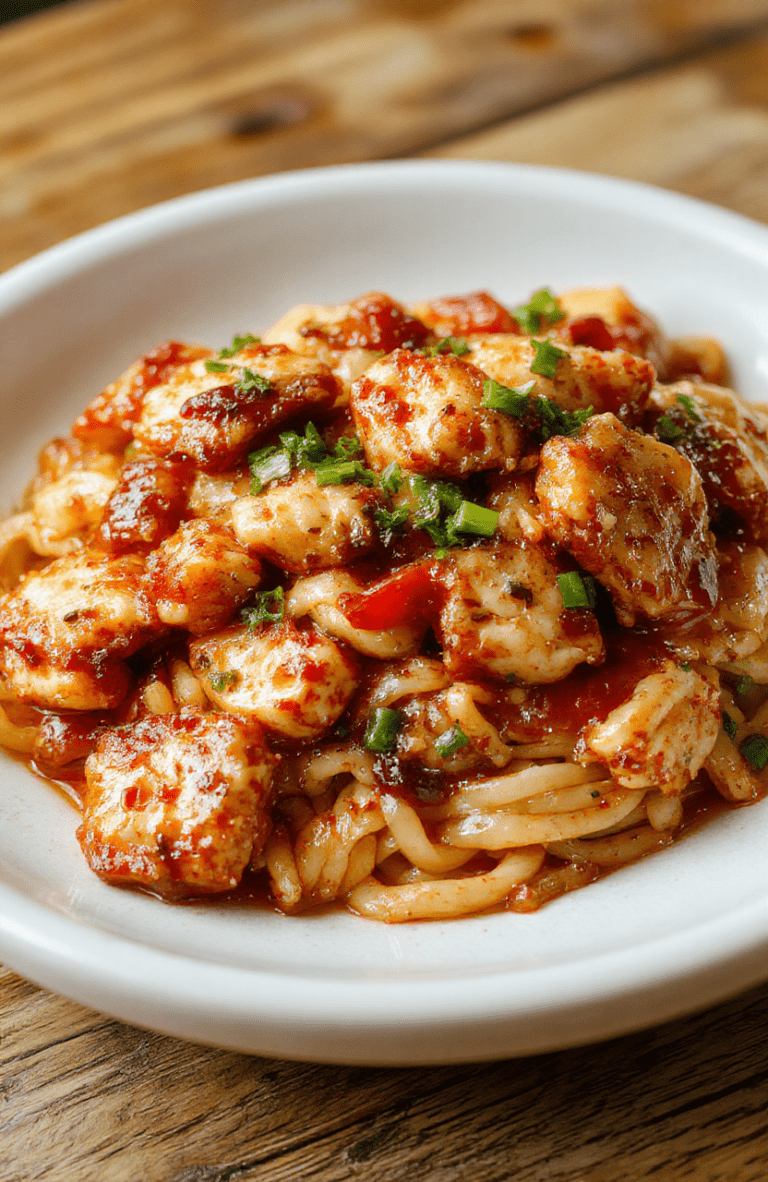
Kung Pao Noodles with Chicken
Authentic-style kung pao noodles with tender chicken, crunchy peanuts, colorful peppers, and fiery chilies—made healthier and faster than takeout!
- Total Time: 30 minutes
- Yield: 4 servings
Ingredients
- 8 oz rice noodles (flat or round)
- 1 lb boneless skinless chicken breast or thighs, cut into 1-inch cubes
- 2 tbsp soy sauce (divided)
- 1 tbsp Shaoxing wine (or dry sherry)
- 1 tsp sesame oil
- 1 tsp cornstarch
- 2 tbsp peanut oil (or vegetable oil)
- 6–8 dried Sichuan chilies, halved and seeded (adjust to heat preference)
- 4 garlic cloves,minced
- 1 tbsp fresh ginger, minced
- 1 red bell pepper, sliced
- 1 green bell pepper, sliced
- 1 yellow bell pepper, sliced
- 1/2 cup roasted peanuts
- 2 scallions, sliced
- 1 tsp black vinegar (or substitute rice vinegar)
- 1 tsp sugar
- 1 tsp chili oil (optional, for extra heat)
- 1/4 tsp ground Sichuan peppercorns (optional, for numbing spice)
Instructions
- Cook rice noodles according to package instructions; drain and toss with 1 tsp oil to prevent sticking. Set aside.
- In a bowl, mix chicken with 1 tbsp soy sauce, Shaoxing wine, sesame oil, and cornstarch. Let marinate 10 minutes.
- In a small bowl, combine remaining 1 tbsp soy sauce, black vinegar, sugar, and 1 tbsp water—set aside as sauce.
- Heat peanut oil in a wok or large skillet over medium-high heat. Add dried chilies and stir-fry 15 seconds until fragrant but not burnt.
- Add garlic and ginger; stir-fry 30 seconds.
- Add marinated chicken and stir-fry 3–4 minutes until golden and cooked through.
- Add bell peppers; stir-fry 2 minutes until tender-crisp.
- Pour in sauce; stir to combine. Add cooked noodles and peanuts; toss 1–2 minutes until noodles absorb sauce.
- Off heat, stir in optional Sichuan peppercorns and chili oil. Top with scallions and serve immediately.
Notes
- For gluten-free, use tamari instead of soy sauce.
- Toast Sichuan peppercorns in a dry pan first for intensified flavor.
- Double the sauce if you prefer extra saucy noodles.
- Prep Time: 15 minutes
- Cook Time: 15 minutes
- Method: Stir-fry
- Cuisine: Chinese
- Diet: None specified
Nutrition
- Serving Size: 1 bowl (about 2 cups)
- Calories: 480 Kcal
- Sugar: 6 g
- Sodium: 720 mg
- Fat: 18 g
- Saturated Fat: 3 g
- Unsaturated Fat: 12 g
- Trans Fat: 0 g
- Carbohydrates: 52 g
- Fiber: 3 g
- Protein: 32 g
- Cholesterol: 70 mg